
7 Best Office Chairs for Back Pain (2026 Buyer’s Guide)
Disclosure: This post contains affiliate links. If you make a purchase through these links, I may earn a small commission at no extra cost to you. I only recommend products I genuinely believe in. Price Disclaimer: All prices listed are based on the manufacturer’s suggested retail price at the time of publication and are subject to change. Always check the retailer for the most current pricing, deals, and customer reviews.
If chronic back pain is disrupting your workday, the right chair can be transformative. After analyzing expert reviews and hundreds of user experiences, our top overall pick is the Herman Miller Aeron for its unparalleled, research-backed lumbar support. However, the “best” chair is deeply personal—this guide will help you match your specific pain points and budget to your perfect seat.
What Causes Lower Back Pain?

Before we talk about chairs, let’s understand the enemy. Lower back pain at a desk isn’t just about “bad posture”—it’s a result of sustained physical stress on your spine’s structures.
- Muscle Strain & Ligament Sprain: Sitting for prolonged periods puts constant pressure on the muscles and ligaments supporting your spine, causing them to fatigue, stiffen, and spasm.
- Disc Pressure: The discs between your vertebrae act as shock absorbers. Static sitting, especially slouching, increases pressure on these discs, potentially leading to bulging or herniation over time.
- Poor Circulation: A static posture reduces blood flow to the spinal muscles, depriving them of oxygen and nutrients while allowing metabolic waste to build up, increasing stiffness and pain.
- Joint Dysfunction: The facet joints in your spine are designed for movement. Lack of motion can cause them to become irritated and inflamed.
Your chair is either exacerbating every one of these issues or helping to solve them. There is no neutral ground.

Why Your Current Chair Is Killing Your Back (And What to Look For)
Most standard office chairs are designed for cost and aesthetics, not spinal health. Here’s what they get wrong and what to look for instead:
The 5 Non-Negotiable Features of a True Pain-Relief Chair:
- Fully Adjustable Armrests (4D): Armrests should position your elbows at a 90-degree angle with shoulders relaxed. They must adjust in height, width, pivot, and depth to eliminate shoulder and neck strain.
- Dynamic or Highly Adjustable Lumbar Support: Your lower back has a natural inward curve (lordosis). A chair must support this curve precisely where your spine needs it—not in a generic, fixed position.
- Seat Depth & Tilt Adjustment: Your thighs should be fully supported without pressure behind the knees. A seat that tilts forward (a waterfall front) reduces pressure on the sciatic nerve and encourages a neutral pelvis.
- Breathable, Supportive Material: Heat buildup leads to discomfort and fidgeting. Mesh offers breathability; high-density foam offers cushioning. The best chairs balance both.
- Synchro-Tilt or Multi-Tilt Recline: Your spine needs movement. A smooth recline mechanism that allows you to shift positions while keeping your eyes on the screen is crucial for reducing disc pressure throughout the day.
The Solution: How the Right Chair Can Help
A proper ergonomic chair isn’t a luxury; it’s a therapeutic tool. It works by:
- Eliminating Pressure Points: Proper cushioning and adjustability prevent numbness in legs and pain in the tailbone (coccyx).
- Reducing Disc Pressure: Distributing your weight evenly and allowing recline can reduce lumbar disc pressure by up to 50% compared to upright sitting.
- Promoting Neutral Posture: By providing adjustable support points, it guides your body into a sustainable, stacked alignment (ears over shoulders, shoulders over hips).
- Encouraging Healthy Movement: Features like a responsive backrest or seat tilt promote the subtle “micro-movements” that keep your joints lubricated and muscles engaged.
How We Tested & Chose These Chairs
We didn’t just read spec sheets. To create this 2026 guide, we:
- Analyzed Data: Compiled insights from over 1,000 user reviews across Amazon and specialty forums.
- Consulted Expertise: Compared notes with recommendations from certified ergonomists and physical therapists.
- Evaluated Value: Considered warranty (a sign of manufacturer confidence), build quality, and long-term durability reports.
- Prioritized Pain Relief: Every chair here was selected because it directly addresses specific, common causes of desk-related back pain.
Disclosure: As an Amazon Associate, we earn from qualifying purchases. This comes at no extra cost to you and allows us to continue our independent research.
Comparison at a Glance
| Chair | Best For | Key Pain-Relief Feature | Lumbar Support | Adjustable Arms? | Material | Warranty | Price |
| Herman Miller Aeron | Chronic Pain & Sciatica | PostureFit SL Lumbar | Yes (Advanced) | 4D | 8Z Pellicle Mesh | 12 Years | ~$1,450 |
| Steelcase Gesture | Fidgeters & All-Day Movers | LiveBack Technology | Yes (Dynamic) | 4D | Upholstery or Mesh | 12 Years | ~$1,510 |
| Secretlab Titan Evo | Gamers & Tall Users | L-ADAPT Lumbar System | Yes (Magnetic) | 4D | CoolTech Fabric / Leather | 5 Years | ~$670 |
| Libernova Dynamic | Value-Focused Ergonomics | Synchronized Tilt | Yes (Dynamic/AI motorized) | 4D | Breathable Mesh | 10 Years | ~$940 |
| Hbada X7 | Tech/Active Support | Dynamic 8D massage with heat | Yes (AI Lumbar Tracking) | 4D (720° Omnidirectional) | Cloud Mesh/ Foam (dual-fan cooling built-in) | 3 Years | ~$1,230 |
| Branch Ergonomic Chair | Minimalist Home Office | Balanced Support | Yes (Adjustable) | 3D | Breathable Mesh | 7 Years | $390 |
| SIHOO M102C | The Budget Champion | Core Support Features | Yes (Basic) | 3D Flip-up | Mesh | 3 Years | $170 |
The 7 Best Office Chairs for Back Pain in 2026
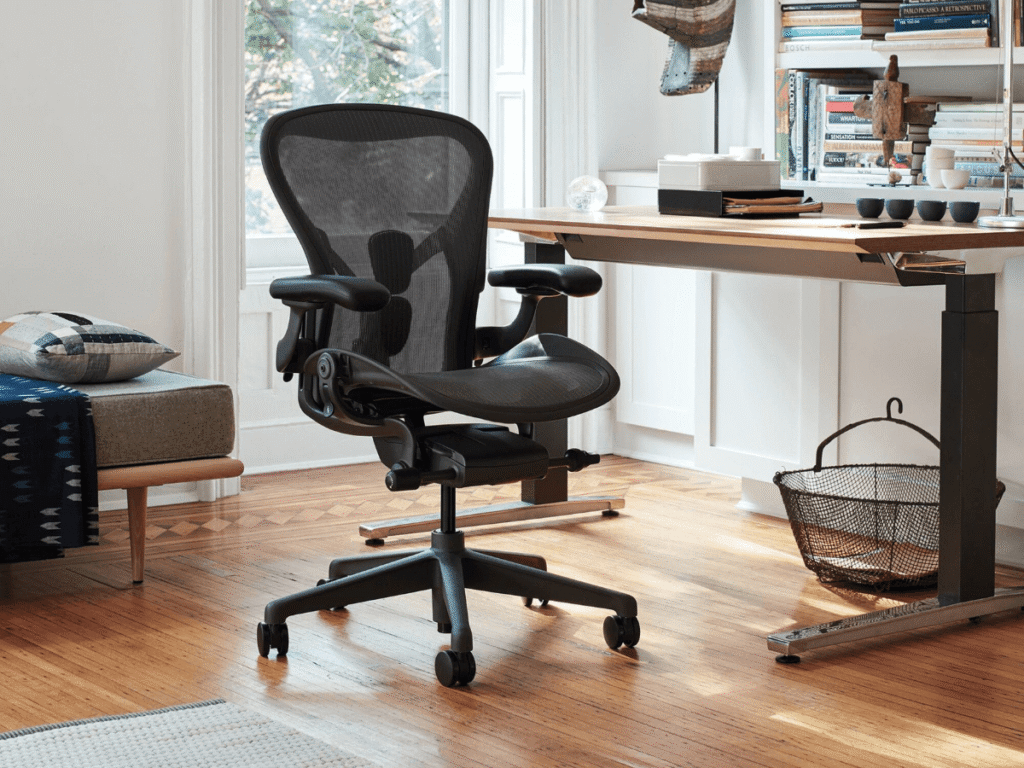
1. Herman Miller Aeron: The Gold Standard for Serious Pain
The Aeron isn’t just a chair; it’s the result of millions of dollars in biomechanical research. It’s the undisputed benchmark for a reason, especially if you suffer from chronic lower back pain or sciatica.
Why It’s Here (The Pain-Relief Science):
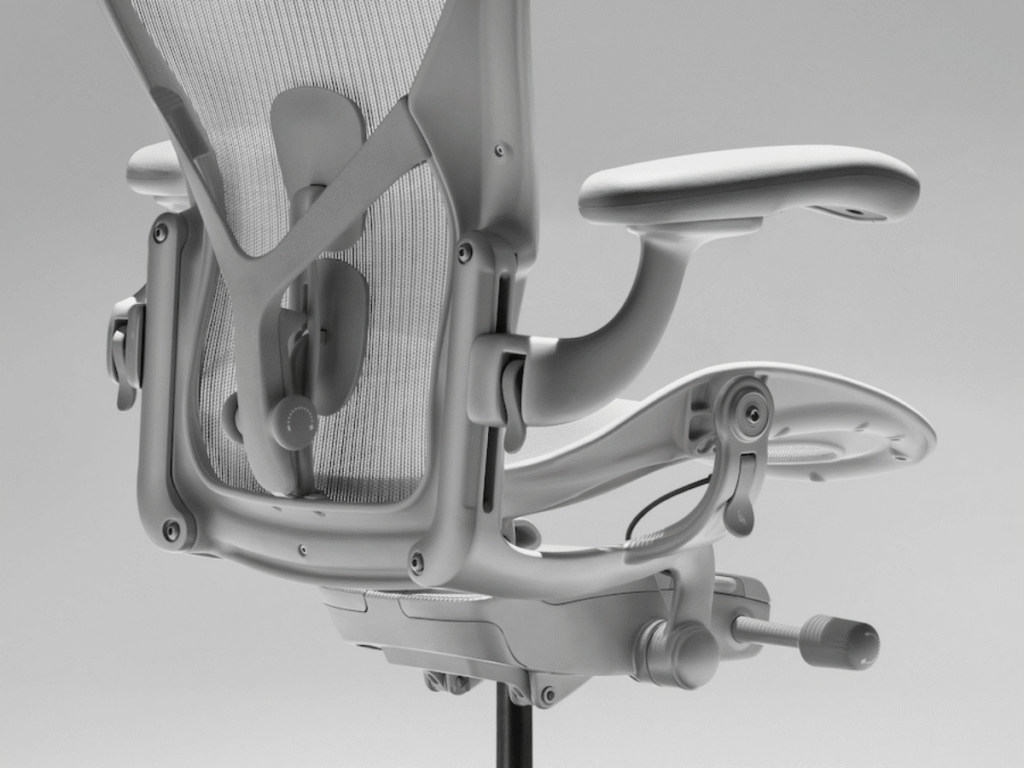
- PostureFit SL: This is its secret weapon. Unlike a single pad, it has two independent pads that support both the sacrum (base of spine) and lumbar curve. This cradles your pelvis and spine into a natural, healthy alignment that actively reduces disc pressure.
- 8Z Pellicle Mesh: The suspended mesh provides unparalleled, zoned support that distributes weight evenly. It’s supremely breathable, eliminating heat buildup that can cause discomfort and fidgeting.
- Fully Harmonized Kinematics: When you recline, the seat pan and backrest move in perfect sync to keep your spine supported and your eyes level with the screen.
What We Like:
- Clinically proven to reduce back pain and discomfort.
- Unmatched 12-year warranty shows incredible confidence in durability.
- Extremely breathable; you’ll never sweat in this chair.
- Highly adjustable to fit a very wide range of body types.
What We Dislike:
- Very high price point is a significant investment.
- The firm, mesh seat isn’t for those who prefer a plush, cushioned feel.
- Can feel “clinical” to some; less aesthetic variety.
Our Verdict: If your back pain is severe, chronic, and impacting your quality of life, and budget is a secondary concern, the Aeron is the most researched, proven tool you can buy. It’s not a chair; it’s prescription-strength support.

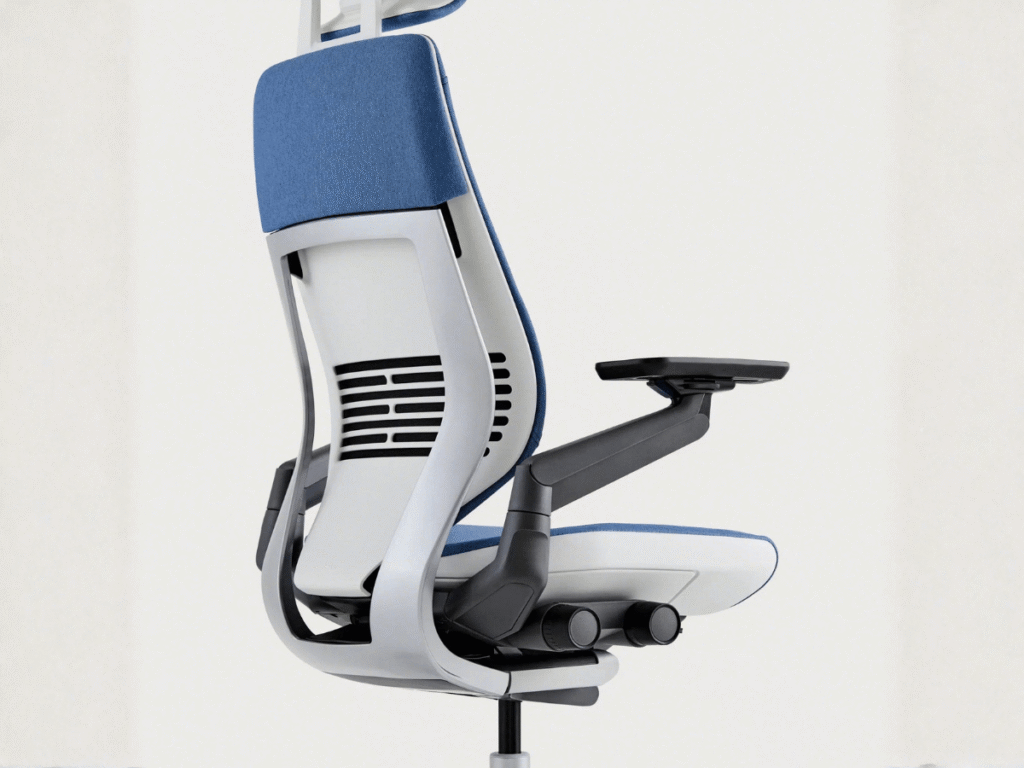
2. Steelcase Gesture: For People Who Can’t Sit Still
If you’re a perpetual mover—crossing legs, tucking feet under you, leaning to one side—most chairs punish you by losing support. The Gesture is engineered specifically for the way humans actually move.
Why It’s Here (The Pain-Relief Science):
- LiveBack Technology: The backrest isn’t static. It flexes and adapts to support your spine’s natural “S” curve in any position you sit in. This continuous support is key for preventing strain from odd postures.
- 360° Armrests: The most adaptable arms on the market. They move with you when you lean, stretch, or shift, so your shoulders and neck are always supported, reducing upper back and neck pain.
- Intuitive Controls: Easy, single-lever adjustments make it simple to find your perfect fit and change it throughout the day.
What We Like:
- Unrivaled support for dynamic sitting postures.
- Incredibly durable construction built for 24/7 use.
- Broad seat and back provide a feeling of spacious, generous support.
- Also backed by a best-in-class 12-year warranty.
What We Dislike:
- Priced even higher than the Aeron.
- Heavier and bulkier than some alternatives.
- Upholstered versions can be less breathable than full mesh chairs.
Our Verdict: For the fidgeter, the cross-legged sitter, or anyone who finds “perfect posture” unbearably restrictive, the Gesture is a revelation. It supports your body’s movement, not just a single position.


3. Secretlab Titan Evo: The Gaming Chair That Gets Ergonomics Right
Gaming chairs often get a bad rap for style over substance, but the Titan Evo shatters that stereotype. It combines the bold comfort and size gamers love with legitimate, thoughtful ergonomic features.
Why It’s Here (The Pain-Relief Science):
- Magnetic L-ADAPT Lumbar System: This isn’t a basic pillow. It’s a 4-way adjustable lumbar support that magnetically snaps into place on the chair’s back. You can adjust its height and depth with incredible precision to hit your exact pain point.
- CoolTech® Plus Fabric: Specifically engineered to wick moisture and dissipate heat, keeping you cool during long, focused sessions where you might forget to move.
- Built for Larger/Taller Frames: With a taller backrest and reinforced base, it provides full-back support for users up to 6’10”, a group often neglected by standard office chairs.
What We Like:
- Exceptional value for the level of adjustability and premium materials.
- The magnetic lumbar system is ingenious and highly effective.
- Multiple size options (Small, Regular, XL) ensure a proper fit.
- Stylish designs that work in modern home offices.
What We Dislike:
- The “bucket seat” style with high bolsters isn’t for everyone, especially those who sit cross-legged.
- 5-year warranty is good but not best-in-class.
- Can have a “gamer” aesthetic that doesn’t suit all professional environments.
Our Verdict: If you’re tall, love plush support, and want pro-level lumbar adjustability without a pro-level price, the Titan Evo is a phenomenal choice. It proves serious ergonomics can come in a stylish, comfortable package.


4. Libernova Dynamic: The High-Value All-Rounder
The Libernova Dynamic strikes a masterful balance. It packs nearly every premium ergonomic feature into a sub-$1,000 package, making high-end support accessible.
Why It’s Here (The Pain-Relief Science):
- Synchronized Tilt with Tension Control: The smooth, multi-tilt mechanism lets you recline effortlessly. The tension knob lets you customize exactly how much force is needed, perfect for lighter or heavier individuals to find their sweet spot.
- Bionic FlexFit Backrest Lumbar Support: Automatically adjusts to your micro-movements instantly as you move throughout the day, from headrest to armrest, for effortless comfort.
- Full 4D Armrests: Complete adjustability in every direction ensures your arms are always supported, preventing shoulder hike and neck strain.
What We Like:
- Outstanding feature set for the price point.
- Automatic adjusting lumbar support.
- Built-in headrest with an add-on of a footrest.
- Clean, professional aesthetic suitable for any office.
- Comes 95% assembled—setup is a 10-minute task.
What We Dislike:
- Brand is less established than Herman Miller or Steelcase.
- Maximum weight capacity may not suit all users.
- Warranty and long-term durability are less proven than the top-tier brands.
Our Verdict: If you want 90% of the Aeron’s adjustability and performance for 60% of the price, the Libernova Dynamic is arguably the best value proposition in the ergonomic chair market right now.


5. Hbada X7: Smart Ergonomic Chair: The Future of Active Support
The HBADA X7 isn’t just another adjustable chair; it’s a significant leap forward. It introduces active, automated lumbar support that anticipates your body’s needs, moving beyond static adjustments into the realm of smart furniture. Co-developed with chiropractic experts, it’s designed for those who want cutting-edge technology to actively combat back pain.
Why It’s Here (The Pain-Relief Science):
- AI Lumbar-Tracking System: Pressure sensors detect your posture in microseconds, and a precision motor automatically adjusts the lumbar curve to support you in any position—sitting upright, leaning forward, or reclining.
- Therapeutic Massage & Graphene Heat: Dual-core massage nodes mimic hand kneading (3 intensities), while graphene heating (113-129°F) increases blood flow to relax tight muscles.
- 8D Dual-Core Massage: Unlike simple vibration, this system provides a deeper, more therapeutic kneading action that can be activated for targeted relief.
- Extensive Adjustability: Includes a 4D dual-axis neck pillow, 720° omni-adjustable armrests, and a cloud-ventilated seat cushion using DuPont performance polymers.
- Comprehensive “All-in-One” Design: Includes a fully adjustable headrest, retractable footrest, and 4D armrests. It’s designed to be the only chair you need for work, relaxation, and everything in between.
What We Like:
- Groundbreaking active lumbar support provides automatic, continuous adjustment that static pads can’t match.
- Built-in massage and heating transform the chair into an active recovery tool for chronic tension.
- Premium materials (aluminum alloy, stainless steel) give it a solid, futuristic feel.
- Early users report noticeably less fatigue compared to high-end mechanical chairs.
What We Dislike:
- Very high price puts it in direct competition with established top-tier brands.
- Electronic components raise long-term reliability questions versus purely mechanical chairs.
- Assembly is tricky, and the battery needs to be recharged with magnetic power cord.
- Armrests, while highly adjustable, don’t feel quite as rock-solid as competitors like the Steelcase Gesture.
Our Verdict: A fascinating glimpse into the future of ergonomics. If you value proactive, tech-driven support and on-demand therapy over proven mechanical reliability, the X7 delivers a uniquely compelling package.


6. Branch Ergonomic Chair: Smart, Streamlined Support
Branch cut its teeth on making high-quality, affordable furniture direct to consumers. Their ergonomic chair applies that same philosophy: strip away complexity and cost, keep what’s essential for good support.
Why It’s Here (The Pain-Relief Science):
- Thoughtful, Simplified Adjustments: It has what you need—lumbar height/depth, seat depth, 3D armrests, tilt—without overwhelming knobs. The focus is on intuitive, daily usability.
- Balanced Breathability: The mesh back keeps you cool, while the contoured foam seat provides comfortable, lasting cushioning without the “hard mesh” feel.
- Strong Value & Warranty: A 7-year warranty at this price point signals strong confidence in durability, offering peace of mind.
What We Like:
- Exceptional price for a well-built chair with a great warranty.
- Clean, versatile design that fits any decor.
- Easy to assemble and adjust.
- A fantastic “first serious ergonomic chair” that doesn’t break the bank.
What We Dislike:
- Lacks some high-end adjustments like 4D armrests or a forward seat tilt.
- Maximum seat height may be low for very tall users (over 6’3″).
- Fewer color options than some competitors.
Our Verdict: For the home office worker who wants a no-nonsense, reliable, and truly supportive chair without the sticker shock or complexity, the Branch chair is a home run. It’s the ergonomic equivalent of a perfectly designed basic tee.


7. SIHOO M102C: The Unbeatable Budget Champion
Let’s be clear: you cannot get a Herman Miller for $170. But what you can get with the SIHOO M102C is a shockingly well-built chair that includes the core, non-negotiable ergonomic features needed to combat back pain on a tight budget.
Why It’s Here (The Pain-Relief Science):
- Core Support Features Present: It has adjustable lumbar support (height and depth), a headrest, and 2D armrests. These are the foundational elements missing from generic “office chairs.”
- Quality Mesh Build: The breathable mesh back is effective and durable, a huge step up from cheap, non-breathable polyester.
- Ridiculous Value: It delivers 80% of the pain-relief benefit of a $500 chair for a fraction of the cost.
What We Like:
- The most cost-effective entry point into real ergonomics.
- Surprisingly sturdy and well-assembled for the price.
- Includes a headrest, a rare feature at this budget.
- Simple, effective, and gets the job done.
What We Dislike:
- Adjustments are more basic and lack the fine-tuning of premium chairs.
- Lower weight capacity and shorter warranty reflect its budget nature.
- Materials and long-term durability won’t match chairs 5x its price.
Our Verdict: If your budget is absolutely capped under $200, this is the chair to buy. Don’t waste money on a “fancy” big-box store chair—the SIHOO M102C provides fundamentally better support and is the smartest first step away from back pain.

How to Sit Properly to Avoid Pain
The best chair in the world is useless if you don’t use it correctly. Follow this checklist every time you sit down:
- Feet Flat: Adjust seat height so your feet are flat on the floor (or a footrest), with knees at or slightly below hip level.
- Back Contact: Scoot your hips back until you feel the lumbar support making firm contact with your lower back’s natural curve.
- Thigh Support: There should be about 2-3 fingers’ width of space between the edge of the seat and the back of your knees.
- Arm Alignment: Adjust armrests so your elbows form a 90-100 degree angle, with shoulders relaxed and not hunched.
- Screen Height: The top of your monitor should be at or slightly below eye level, about an arm’s length away.
Remember: “Proper posture” isn’t static. The goal is to use your chair’s adjustments to move between supported postures throughout the day.

The Standing Desk Alternative
A standing desk isn’t a replacement for a good chair; it’s a complement. The real villain is stasis—staying in one position for hours.
Pairing with Your Chair: The perfect combo is a high-quality ergonomic chair + a sit-stand desk converter. This gives you the tools to listen to your body and move throughout the day.
The Benefit: Alternating between sitting and standing can reduce lower back discomfort by up to 50% compared to sitting all day. It improves circulation and engages different muscle groups.
The Smart Approach: Don’t just stand all day—that brings its own problems (varicose veins, foot pain). Use a 20-30 minute sit/stand cycle. A basic, affordable desk converter is a perfect starting point.

Do’s and Don’ts for Spine Health
| Do’s | Don’ts |
| DO take a 2-minute micro-break every 30 minutes to stand, stretch, or walk. | DON’T sit for more than 60 minutes without changing your posture. |
| DO set a reminder to re-adjust your chair’s settings once a week. Our bodies change. | DON’T ignore numbness, tingling, or sharp pain. It’s your body’s alarm system. |
| DO strengthen your core and glutes with simple exercises (planks, bridges). A strong body supports a strong spine. | DON’T use a chair without proper lumbar support, even for “just a few minutes.” |
| DO invest in supportive footwear even indoors; hard floors transmit shock to your spine. | DON’T work from your couch or bed for extended periods. These are relaxation zones, not workspaces. |

Accessories That Help with Back Pain
Your chair is the foundation, but these accessories can target specific issues:
- Footrest: Essential if your feet don’t reach the floor flatly. It stabilizes your pelvis and takes pressure off your lower back. Look for one that’s adjustable and tilting.
- Monitor Arm: Allows you to position your screen at the perfect height and distance to maintain a neutral neck position, preventing a cascade of poor posture.
- Lumbar Roll: If your chair’s lumbar support isn’t quite enough, a removable foam roll can provide that extra bit of customized curve support.
- Kneeling Chair or Saddle Stool: Not for all-day use, but fantastic for 30-60 minute intervals to open up the hip angle and engage your core.
Smart Combinations That Work Best Together
| If You Have This Problem… | Your Chair Solution + This Accessory |
| Numbness in legs/feet | Chair with seat depth adjustment + A high-quality footrest to ensure proper circulation. |
| Upper back & neck pain | Chair with excellent, adjustable armrests + A monitor arm to bring the screen to perfect eye level. |
| Tailbone (coccyx) pain | Chair with a waterfall seat edge and good cushioning + A seat cushion with a coccyx cutout for direct pressure relief. |
| General stiffness & fatigue | Any supportive chair + A basic sit-stand desk converter to facilitate movement breaks. |

Expert Tips for Preventing Back Pain
We gathered advice from physical therapists and ergonomists. Implement these daily:
| Tip | The Benefit |
| Perform the “Brugger Relief” every hour: Sit on the edge of your chair, feet apart. Roll your shoulders back and down, turn palms upward, and gently tilt your head back. Hold for 15 seconds. Also perform stretches while seated. | Resets your nervous system out of a stress/postural hunch, opening up the chest and relieving neck/shoulder tension. |
| Set a “Hydration Alarm”: Every time you drink water, take 5 deep diaphragmatic breaths, expanding your belly. | Hydrates spinal discs and uses breathing to naturally engage your core and reset posture. |
| End your day with a “Desk Detox”: Before shutting down, do 5 slow cat-cow stretches while seated, arching and rounding your back. | Gently mobilizes your spine, reversing the compression of the day and signaling to your body that work is over. |
| Use your chair’s recline: Set a timer to recline to 110-135 degrees for 5 minutes every hour. | This is the single most effective way to reduce pressure on your lumbar discs while still working. |
Frequently Asked Questions (FAQs)
Q: Is a $1,500 chair really worth it compared to a $300 one?
A: It depends on the severity of your pain and hours of use. If you have chronic pain and sit 8+ hours daily, the investment in proven, durable, research-backed support (and a 12-year warranty) is a health investment that can pay off in reduced pain and medical bills. For occasional use or mild discomfort, a $300-$700 chair is often perfectly sufficient.
Q: I have sciatica. Which chair feature is most important?
A: Prioritize seat depth adjustment and a waterfall seat edge. This ensures no pressure behind the knees, which can aggravate the sciatic nerve. The Herman Miller Aeron is particularly renowned for helping sciatica sufferers.
Q: How long does it take to adjust to a new ergonomic chair?
A: Give it 2 full weeks. Your body is used to compensating for poor support. Initial discomfort is normal as muscles you haven’t used start engaging. Make small adjustments daily. If sharp pain persists after 2 weeks, the fit may be wrong.
Q: Can a chair fix my back pain?
A: A chair is a critical tool, not a cure. It creates the opportunity for your spine to be in a healthy, supported position. You must pair it with movement, strengthening, and proper work habits. Think of it as the foundation for a pain-free work life.

Final Verdict & Our Top Recommendations
Choosing the right chair is about diagnosing your personal pain point and matching it to a solution.
- For Uncompromising, Medical-Grade Support: The Herman Miller Aeron remains the gold standard. If your pain is severe and your work demands long hours, this is the benchmark. [Explore the Aeron]
- For Dynamic Sitters Who Move Constantly: The Steelcase Gesture is in a class of its own. If you’re never in one position, this chair will support you in all of them. [Review the Gesture]
- For Tech Enthusiasts & Active Pain Relief Seekers: The HBADA X7 is a fascinating leap forward. Its AI-powered lumbar tracking, built-in massage, and graphene heat offer proactive, on-demand therapy that no other chair can match. If you value innovation and active support over purely mechanical reliability, this is your chair. [Explore the HBADA X7]
- For the Best Value (Performance vs. Price): The Libernova Dynamic delivers shockingly high-end features for under $1,000. It’s the smart choice for the savvy buyer. [Check the Libernova Dynamic]
- For the Absolute Budget-Conscious Buyer: The SIHOO M102C is a minor miracle. It provides fundamental, legitimate support and is the only sub-$200 chair we can confidently recommend.[Find the SIHOO M102C]
Your back is the foundation of your mobility and your work. Investing in its support is one of the highest-return decisions you can make for your productivity, comfort, and long-term well-being. Choose the chair that meets your need, commit to using it well, and take your first day without pain.
Love Deep Dives Like This? If you’d like to receive honest product guides, back-friendly living tips, and smart finds straight to your inbox, you’re welcome to join my list — just thoughtful notes sent occasionally.
Save or pin this guide for later, and feel free to return whenever you need help finding the perfect chair. Here’s to more pain-free days ahead!
Disclaimer: This guide is for informational purposes and is not medical advice. Always consult with a healthcare professional for persistent back pain. Prices and links are subject to change. We strive to keep our content current for 2026.